
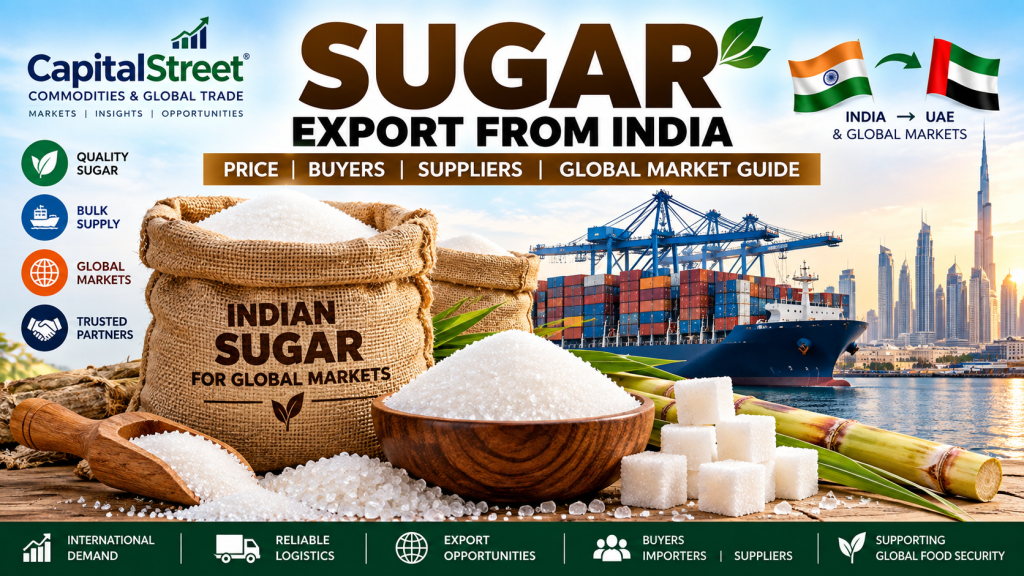
Sugar Export from India: Price, Buyers, Suppliers & Global Market Guide
Sugar Export from India: Price, Buyers, Suppliers & Global Market Guide
A practical overview of sugar export from India covering price factors, international buyers, suppliers, trade documentation, shipping and global market considerations.
Sugar Export from India is part of the wider international agricultural commodity market connecting producers, traders, exporters, importers, distributors and industrial buyers.
For international buyers, a sugar transaction involves much more than comparing headline prices. Product specifications, quantity, origin, packaging, shipment terms, freight and regulatory requirements can materially affect the final commercial offer.
Understanding the Sugar Export Market
Sugar is traded internationally for retail distribution, food processing, hospitality, manufacturing and other commercial applications. Buyers may require different grades and specifications depending on their intended use and destination market.
Exporters and buyers should therefore agree on the complete product specification before comparing quotations or finalising a contract.
Sugar Price: What Determines an Export Quote?
There is no single permanent export price applicable to every sugar shipment. Commercial quotations may vary according to:
- Product grade and specification
- Order quantity
- Country and location of origin
- Packaging requirements
- Domestic and international market conditions
- Currency movements
- Freight and insurance costs
- Port of loading and destination
- FOB, CFR or CIF terms
- Payment and delivery conditions
Who Buys Sugar in International Markets?
Businesses importing sugar for domestic distribution or industrial consumption.
Bulk traders supplying retailers and commercial customers.
Businesses sourcing sugar as an ingredient for food and beverage production.
Companies supplying food products through established regional networks.
India to UAE & GCC Sugar Trade
Businesses evaluating sugar trade between India and markets such as the UAE and GCC should assess current commercial conditions, applicable export and import rules, logistics, customs procedures and food-related requirements before contracting a shipment.
Dubai and the wider UAE also operate as important regional commercial and logistics centres, making the market relevant to businesses studying Gulf food and commodity trade.
What Should International Buyers Check?
- Supplier identity and business credentials
- Product specification and grade
- Available quantity
- Packaging
- Country of origin
- Inspection requirements
- Loading and destination ports
- Incoterms
- Payment conditions
- Required trade and customs documentation
FOB, CFR and CIF Sugar Quotations
The Incoterm used in a quotation is important because it determines which costs and responsibilities are included in the transaction. An FOB quotation should therefore not be compared directly with a CIF quotation without adjusting for the different cost components.
How Sugar Suppliers Can Reach Global Buyers
Suppliers approaching international buyers should provide clear commercial information instead of generic messages. A professional offer can identify the product, specification, origin, quantity, packing, loading port, shipment period, Incoterm and proposed payment conditions.
Both buyers and sellers should conduct appropriate counterparty due diligence before transferring funds or committing goods.
Shipping & Trade Finance
International commodity transactions can involve shipping companies, freight forwarders, banks and trade-finance providers. The appropriate structure depends on the transaction, counterparties and agreed commercial terms.
CapitalStreet – Commodities & Global Trade
Follow CapitalStreet for rice, sugar, agricultural commodities, fruits and vegetables, export-import markets, shipping, trade finance and global trade information.
Frequently Asked Questions
What affects sugar export prices from India?
Prices can depend on specifications, quantity, market conditions, currency, packing, freight, destination and the agreed commercial terms.
Who are the potential buyers of exported sugar?
Potential commercial buyer segments include importers, wholesalers, distributors, food manufacturers and other businesses requiring sugar in bulk.
Can Indian suppliers sell sugar to UAE buyers?
Commercial opportunities may exist, but exporters and importers need to verify the current regulatory, customs, product and shipment requirements applicable at the time of the transaction.
How can a supplier find international sugar buyers?
Trade exhibitions, industry networks, B2B platforms, importer research and direct business outreach can help suppliers identify prospective buyers. Counterparty verification remains important before entering into a transaction.
Disclaimer: This article is for general trade and market information. It does not represent a live sugar quotation, offer to buy or sell, or financial advice. Prices, trade policies, regulations and shipping conditions can change and should be independently verified before any transaction.

Author: CapitalStreet Editorial & Business Team
CapitalStreet Editorial & Business Team covers global business, trade, finance, markets, technology, entrepreneurship and Media-for-Equity, connecting businesses and professionals across international markets.