
Best Algorithmic Trading Software and Tools for Traders
Explore popular algorithmic trading platforms, their features, strategy development tools, backtesting capabilities and important factors to consider before choosing software.
Technology plays an important role in modern financial markets. Traders increasingly use computer-based platforms to analyse market data, develop trading strategies and automate order execution. Algorithmic Trading Software makes these activities more systematic by allowing users to create, test and implement predefined trading rules.
From beginner-friendly charting platforms to advanced programming environments, different tools offer features for different trading requirements. This guide explores popular Algorithmic Trading Software, their key features and what traders should consider before selecting a platform.
What Is Algorithmic Trading Software?
Algorithmic Trading Software refers to computer programs and platforms that help traders develop, test and execute automated trading strategies.
These tools use market information, mathematical calculations, technical indicators and predefined instructions to identify trading opportunities.
Depending on the platform, traders can use programming languages, visual strategy builders or built-in automation features to create trading systems.
Popular Algorithmic Trading Software and Tools
Several platforms provide features for algorithm development, market analysis, backtesting and automated trade execution.
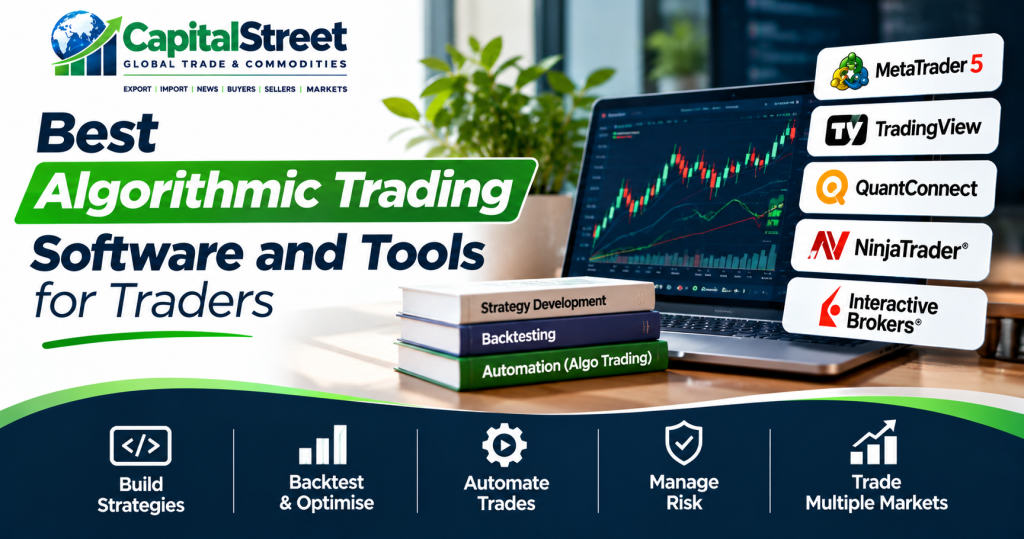
MetaTrader 5 (MT5)
MetaTrader 5 is a popular trading platform that supports automated trading through Expert Advisors (EAs). Traders can develop automated strategies using MQL5 and test them with its built-in Strategy Tester.
TradingView
TradingView is widely used for financial charting, technical analysis and strategy development. Its Pine Script language allows traders to create custom indicators and trading strategies. Alerts and supported integrations can help connect strategies with external execution systems.
QuantConnect
QuantConnect is a cloud-based algorithmic trading research and development platform. It supports Python and C# for developing, backtesting and deploying trading strategies through supported brokerage integrations.
NinjaTrader
NinjaTrader provides trading, charting, strategy development and backtesting tools, particularly for futures traders. Its NinjaScript environment allows users to develop customised automated trading strategies.
Interactive Brokers Trader Workstation (TWS) and APIs
Interactive Brokers provides trading technology and APIs that allow developers to connect custom applications with supported brokerage services. Traders can use these tools to automate order placement and manage trading activities across supported markets.
Key Features of Algorithmic Trading Software
Before choosing a platform, traders should understand the features that support effective strategy development and execution.
| Feature | What It Does |
|---|---|
| Automated Order Execution | Allows software to submit buy and sell orders when predefined trading conditions are met. |
| Backtesting Tools | Help traders evaluate strategies using historical market data before considering live deployment. |
| Technical Indicators | Provide analytical tools such as moving averages, RSI and MACD for identifying potential market signals. |
| Real-Time Market Data | Helps trading systems monitor price movements and market activity. |
| Risk Management | Supports features such as stop-loss orders, position limits and predefined exit conditions. |
| Strategy Customisation | Allows traders to modify trading rules according to their objectives and market requirements. |
How to Choose the Right Algorithmic Trading Software?
Selecting suitable Algorithmic Trading Software depends on trading experience, programming knowledge, financial instruments and available resources.
Traders should consider the following factors:
Beginners may prefer platforms with simple interfaces and built-in strategy tools.
Developers should check supported programming languages and customisation options.
Look for reliable historical data and strategy testing features.
Ensure the software supports the intended broker and trading market.
Review account protection, API permissions and data security features.
Consider software subscriptions, brokerage charges, data fees and other expenses.
Check the availability of technical documentation, tutorials and support services.
Benefits of Using Algorithmic Trading Software
Algorithmic Trading Software offers several advantages to traders and financial market participants.
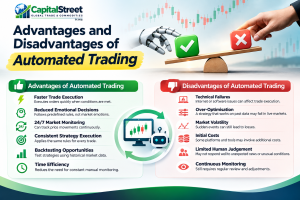
Automates order placement when predefined conditions are satisfied.
Reduces the need for continuous manual market monitoring.
Applies predefined trading rules systematically.
Helps process large amounts of financial market information.
Allows traders to evaluate trading strategies using historical data.
Helps maintain discipline by following programmed instructions.
Risks of Using Algorithmic Trading Software
Although these platforms provide useful trading features, they also involve certain risks.
Software errors, internet interruptions and server failures can affect trading operations.
Sudden market movements can result in unexpected losses and execution problems.
Errors in trading instructions can generate unintended orders.
Historical results do not guarantee similar performance in live markets.
Poorly secured trading accounts and API connections may create security risks.
No Algorithmic Trading Software can guarantee profits. Traders should apply suitable risk management practices.
Which Algorithmic Trading Software Is Suitable for Beginners?
Beginners should consider platforms that provide accessible charting, strategy testing and educational resources.
TradingView can help beginners understand chart-based strategies and technical analysis. MetaTrader 5 provides an environment for exploring Expert Advisors and automated trading. QuantConnect can be useful for learners interested in programming-based strategy development.
The right choice depends on the user’s experience, preferred financial market and programming knowledge. Beginners should practise with demo accounts or simulated trading environments before using real capital.
CapitalStreet – Trading Software & Financial Markets
CapitalStreet provides information covering global financial markets, trading technology, automated trading systems, business developments and financial industry insights.
Understanding different Algorithmic Trading Software and tools can help traders explore technology-driven strategies and identify platforms that match their trading requirements.
For more information about financial markets, trading systems and global finance, explore CapitalStreet.online.
Explore CapitalStreetAlgorithmic Trading Software – FAQs
What is Algorithmic Trading Software?
Algorithmic Trading Software is a computer-based platform that helps traders develop, test and execute automated trading strategies using predefined instructions.
Which is the best Algorithmic Trading Software for beginners?
TradingView and MetaTrader 5 are popular options for beginners exploring chart-based analysis and automated trading. The most suitable platform depends on individual requirements and experience.
Is Algorithmic Trading Software free?
Some platforms offer free versions or basic features, while others charge subscription fees or additional costs for market data, advanced tools and execution services.
Which programming languages are used in Algorithmic Trading Software?
Python, C++, Java and specialised languages such as MQL5 and Pine Script are used across different trading platforms.
Can Algorithmic Trading Software automatically execute trades?
Yes. Supported platforms can automatically execute orders when programmed conditions are satisfied, provided the required broker connection and permissions are configured.
Is Algorithmic Trading Software suitable for stock market trading?
Yes. Several platforms support automated stock market strategies, depending on broker connectivity, market access and applicable regulations.
Does Algorithmic Trading Software guarantee profits?
No. Trading software cannot guarantee profits. Market volatility, strategy performance, execution costs and technical issues can all affect trading results.
What should traders check before selecting Algorithmic Trading Software?
Traders should evaluate platform compatibility, security, backtesting capabilities, programming support, trading costs and risk management features before making a decision.